
We just got the best Resident Evil movie ever made, and it’s only three minutes long. With less than a month to go until Resident Evil Requiem hits shelves, Capcom is going all-in on a marketing campaign that feels as ambitious as a mainline game. The latest piece of promo, a live-action short titled Evil Has Always Had a Name, doesn’t just sell the game; it quietly becomes the best live-action Resident Evil film ever put to screen.
For a franchise with seven previous movies, that’s not exactly a high bar, but what this short accomplishes in three minutes should have every horror fan and Resident Evil diehard paying attention.
Resident Evil Requiem Brings Back Horror And Action
Resident Evil Requiem is being positioned as a “best of both worlds” entry for the series. Capcom is leaning into dual protagonists in a way that feels like a synthesis of the franchise’s two strongest identities: flashy action and nerve-shredding survival horror.
On one side, we have the triumphant return of Leon S. Kennedy, arguably the most iconic hero in the franchise. His campaign looks built around the intense, kinetic, zombie-slaying combat that defined games like Resident Evil 4 and the recent remakes. Expect gunplay, crowd-control strategies, and plenty of headshots.
On the other, we’re introduced to a brand-new character: FBI analyst Grace Ashcroft. Her side of the story is being pitched as a return to the series’ classic survival horror roots. Limited resources, investigative gameplay, and a more grounded, vulnerable perspective are all hinted at in the trailers and demos Capcom has released so far.
This duality—Leon for action, Grace for horror—sets the perfect stage for a piece of marketing like Evil Has Always Had a Name, a short film that reminds us what’s actually at stake when we start mowing down zombies.
Why Evil Has Always Had a Name Is the Best Resident Evil Movie Ever
The live-action legacy of Resident Evil has always been messy. Paul W. S. Anderson’s six-film series had almost nothing to do with the games’ storylines, but leaned hard into campy, blood-soaked spectacle. Welcome to Raccoon City course-corrected toward game accuracy, but in the process lost a lot of the chaotic fun that made the brand pop on screen.
Evil Has Always Had a Name, by contrast, does something deceptively simple: it respects the horror.
Directed by Rich Lee, the short opens with a gentle, almost saccharine image—a young girl and her mother playing hide-and-seek. We see a small, happy family, an ordinary home, and a little raccoon doll that becomes the heart of the film’s visual language. It’s quiet, real, and human.
That normalcy gets shattered when news reports about an outbreak in Raccoon City start filling the TV screen. In a panic, evacuation orders come in the middle of the night. The sense of dread is palpable, not because of gore or jump scares, but because we’re watching a mother and daughter’s world crumble in real time.
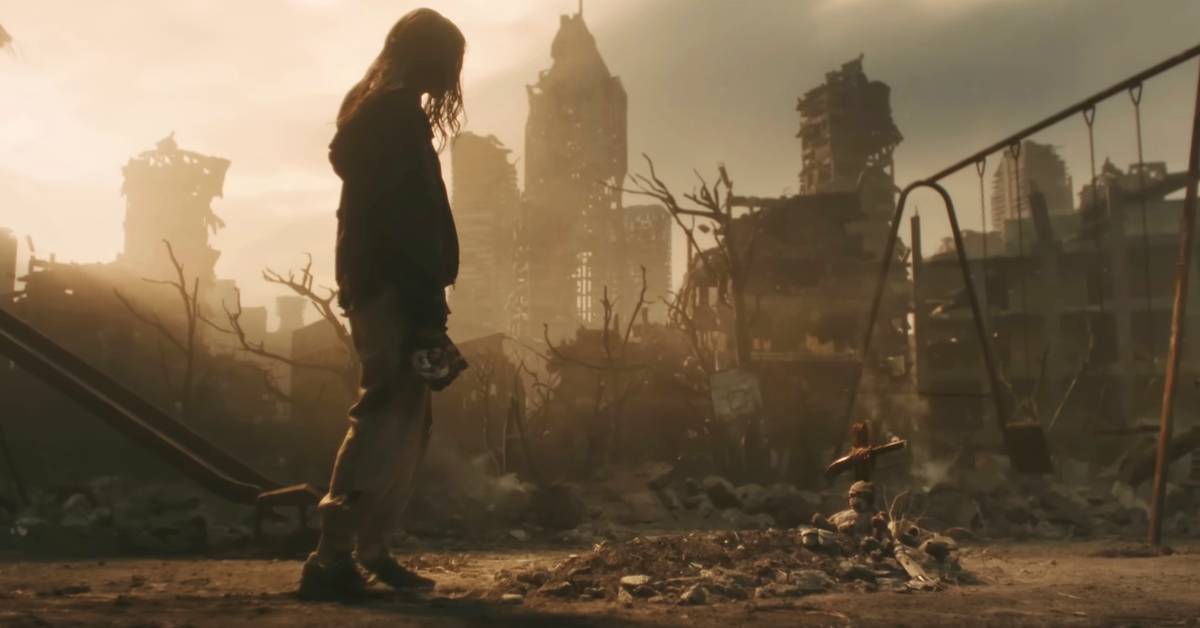
Then, the short jumps ahead to the aftermath. Raccoon City has been bombed into oblivion, reduced to ruins. Amid the rubble, we see the mother again—only now she’s a zombie, shuffling through the wreckage, clutching a photo of her and her daughter. There’s still a shred of recognition in her movements, a flicker of humanity that Requiem’s marketing has been teasing as a new twist in the franchise’s portrayal of the undead.
Her end comes via a headshot from an unseen shooter. It’s sudden, brutal, and disturbingly familiar—because that’s what players have done thousands of times in these games. The difference here is that we’ve been given a name, a life, and a family before the bullet lands.
In three minutes, Evil Has Always Had a Name reframes every zombie in Resident Evil as a person who used to have a story. That emotional gut punch—combined with strong performances and sharp direction—delivers more terror, character development, and pathos than any of the previous feature-length Resident Evil movies ever managed.
The Haunting Symbolism Of The Raccoon Doll
One of the most striking choices in the short is the recurring raccoon doll. At first glance, it’s a clever little easter egg nodding to Raccoon City. But the short turns it into something much more devastating.
The girl carries the stuffed raccoon in those early moments of innocence, clutching it during hide-and-seek. She still has it when everything goes wrong—the evacuation, the panic, the confusion. It becomes a kind of emotional anchor amid the chaos.
By the end, that same raccoon doll sits on top of the girl’s grave.
It’s a simple image, but it lingers. A cute mascot for a doomed city becomes a gravestone guardian, a symbol of all the lives casually erased by corporate greed, government overreach, and viral horror. It makes the world of Resident Evil feel heavy again—less like a cool sandbox full of monsters, and more like a cemetery built on broken homes and abandoned toys.
This is exactly the kind of tonal reset the franchise needed on the live-action side. It makes Umbrella’s sins feel personal again.
Zombies With Humanity: Requiem’s New Twist
One of the most intriguing elements of Resident Evil Requiem is its hint that the infected retain a sliver of who they used to be. Evil Has Always Had a Name leans into that idea with unsettling effectiveness.
The zombified mother doesn’t just wander aimlessly. She keeps a precious photo of herself and her daughter. She finds her way back to her daughter’s grave, suggesting some kind of residual memory or instinct, even as the virus has ravaged her mind and body.
Resident Evil has always flirted with the tragedy of its monsters, but this short shoves that theme to the front. It raises disturbing questions: How much of these people is still in there when you line up your shot? How aware are they of what they’ve become?
By connecting this emotional hook to the hype around Requiem, Capcom is clearly setting expectations for a more morally complex take on zombie-slaying. The game may still ask you to pull the trigger—but now, thanks to this short, every headshot might feel just a little heavier.
Horror Royalty: Maika Monroe In Evil Has Always Had a Name
The emotional core of the short rests entirely on the mother, played by Maika Monroe, one of modern horror’s most reliable scream queens. Genre fans will recognize her from It Follows, Longlegs, Greta, Villains, and Watcher, where she’s built a reputation for grounded, affecting performances even in the most nightmarish scenarios.
Casting Monroe for Evil Has Always Had a Name is a savvy move. She brings a lot of credibility to the project and instantly signals that Capcom isn’t phoning this campaign in. Her performance has to convey warmth, terror, and a kind of broken, post-mortem longing—all with virtually no dialogue and only minutes of screen time.
It works. Her presence gives the short an authenticity and emotional weight that most game marketing can only dream of.
Could The Next Resident Evil Movie Finally Be Great?
The success of Evil Has Always Had a Name naturally raises the next big question: can the upcoming feature-length Resident Evil reboot finally stick the landing?
The signs are promising. The new movie, scheduled for release this fall, is being directed and co-written by Zach Cregger, who exploded onto the horror scene with Barbarian and followed it with the hit Weapons. If you’ve seen Barbarian, you know Cregger has a knack for claustrophobic terror, pitch-black humor, and grotesque body horror—the exact mix that feels tailor-made for Resident Evil.
In fact, Barbarian’s infamous catacombs sequence feels like it was ripped straight from a Resident Evil game: narrow corridors, shifting power dynamics, and a constant dread of what’s around the next corner. Handing this world to Cregger feels like putting it in the care of someone who already instinctively understands its DNA.
Instead of adapting a specific game, Cregger’s Resident Evil will tell an original story, heavily influenced by the tone and structure of the early titles. That’s a smart play. It frees the film from the burden of rigid fan expectations while letting it channel the creeping dread and puzzle-box pacing that made classic Resident Evil so iconic.
Austin Abrams, who stole scenes in Weapons with his manic, darkly comedic energy, is set to lead the film as a medical courier caught in the worst night of his life. He’s joined by Paul Walter Hauser and Zach Cherry, both strong character actors with a knack for balancing levity and tension. That blend of horror and personality is exactly what a Resident Evil movie needs to stand out in a crowded genre space.
After years of uneven adaptations, this might finally be the big-screen trip to Raccoon City fans deserve.
Resident Evil Fans Are Eating Well In 2026
Taken together, Resident Evil Requiem, Evil Has Always Had a Name, and the upcoming Zach Cregger film mark a genuinely exciting moment for the franchise.
Requiem looks poised to deliver a balanced experience that appeals to both old-school survival horror purists and fans of the more action-oriented entries. The live-action short restores weight and humanity to Resident Evil’s world, turning faceless zombies back into tragic victims and making Umbrella’s atrocities feel painfully intimate. And the new film on the horizon suggests that, for the first time, a theatrical Resident Evil could truly capture the games’ unique blend of terror, spectacle, and dark humor.
Of course, there’s always a chance the new game and movie could disappoint. But right now, the energy around Resident Evil feels fresher than it has in years. The franchise isn’t just surviving; it’s mutating into something scarier, smarter, and more emotionally resonant.
If you care about horror, games, or the messy legacy of video game adaptations, this is the moment to pay attention.
Stay tuned to BlueBoxNERD to get the latest from nerd culture.