
Only a few days remain before the highly anticipated Season 2 finale of Fallout drops on Prime Video, and the streamer is giving fans a perfect excuse to revisit the wasteland. To build hype for the big conclusion, Fallout Season 1 is being made available to watch for free on Prime Video’s official YouTube channel, giving both newcomers and longtime fans an easy way to catch up.
As of now, the first four episodes of Fallout Season 1 are live on YouTube, with additional episodes rolling out through the end of the month. This timed release is perfectly aligned with the Season 2 finale, giving anyone who missed the show the first time around a chance to experience one of the most acclaimed game-to-TV adaptations ever released.
Originally dropping all at once in 2024, Fallout Season 1 debuted to wildly positive reviews. The series quickly became a must-watch for both gamers and genre TV fans thanks to its unique blend of dark humor, post-apocalyptic horror, and surprisingly heartfelt character work.
Fallout isn’t a direct adaptation of any one Bethesda game. Instead, it’s an original story set in the same alternate-history, post-nuclear universe that fans know from the Fallout franchise. That choice has allowed the show to honor the games, while also crafting a fresh narrative full of twists, Easter eggs, and deep lore reveals.
Season 1 introduces three core characters whose paths collide across the wasteland. Lucy MacLean, played by Ella Purnell, is a bright-eyed, idealistic resident of Vault 33. Her carefully sheltered existence underground is shattered when raiders abduct her father, Hank MacLean, portrayed by Kyle MacLachlan. Determined to rescue him, Lucy leaves the safety of the vault for the first time, stepping into a dangerous surface world she’s only ever heard about in carefully curated vault lessons.
On the other side of the wasteland, Aaron Moten’s Maximus serves as a squire in the Brotherhood of Steel, the militaristic order obsessed with collecting and controlling advanced technology. Maximus is driven by a need for status, belonging, and survival in a brutal hierarchy where failure can be deadly. His journey eventually intersects with Lucy’s, forging a tense and complicated alliance between a vault dweller and a Brotherhood soldier.
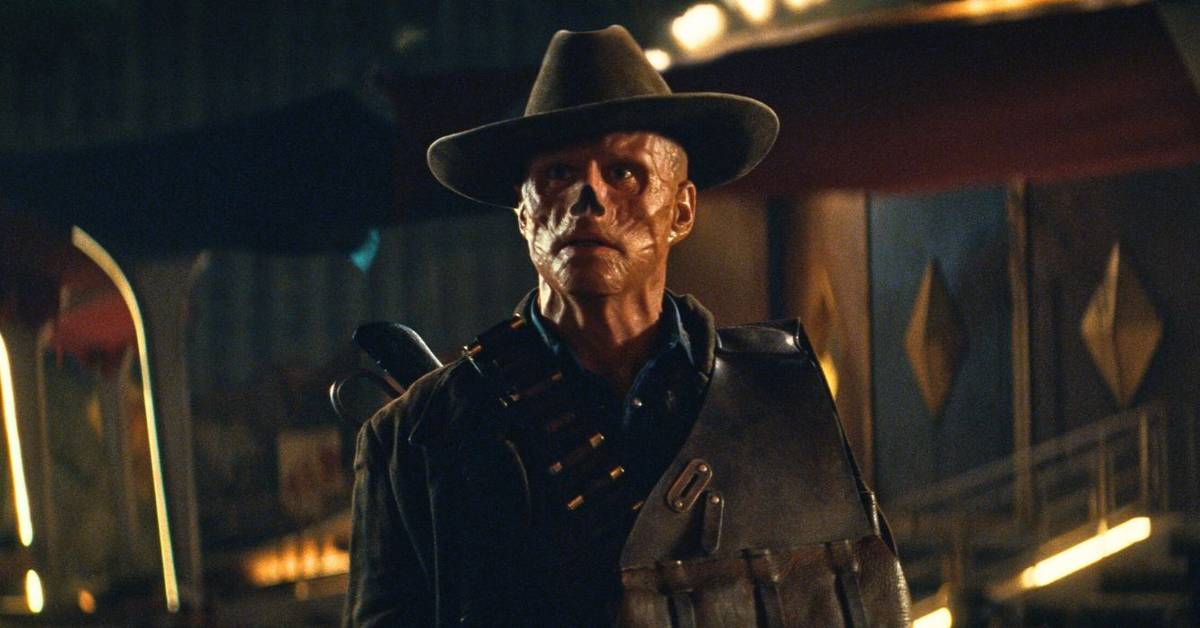
Then there’s The Ghoul, portrayed with scene-stealing intensity by Walton Goggins. Once known as Cooper Howard, a pre-war Hollywood actor and Vault-Tec ambassador, he’s now a hardened, morally ambiguous gunslinger warped by radiation and time. The Ghoul’s past life becomes a major narrative thread, gradually revealing what really happened before the bombs fell and how corporate power, politics, and Vault-Tec’s secret agenda shaped the world of Fallout.
Critically, Fallout Season 1 became an instant standout in the crowded streaming field. It holds a 93% Certified Fresh Critics’ score and a 94% audience score on Rotten Tomatoes, cementing it as one of the strongest video game adaptations ever produced. The show also picked up prestigious recognition in the broader entertainment industry, winning Best Adaptation at The Game Awards and scoring Primetime Emmy nominations for Outstanding Drama Series, Outstanding Lead Actor in a Drama Series, and Outstanding Writing for a Drama Series.
Those accolades, backed by strong word-of-mouth, have helped the series build serious momentum heading into its second season and the upcoming Season 2 finale.
Fallout Season 2 picks up right where Season 1 left off, with the world more fractured than ever and the stakes higher for every major character. After uncovering the shocking truth about what happened to Shady Sands, Lucy makes the radical decision to team up with The Ghoul. Together, they head toward New Vegas, a familiar location for fans of the games, in search of her father Hank, whose actions have far-reaching consequences across the wasteland.
Lucy’s journey in Season 2 forces her to confront the lies, compromises, and moral gray areas that define life in the post-apocalypse. Where Season 1 shattered her naive belief in the Vaults as purely benevolent shelters, Season 2 challenges her to decide what kind of person she wants to be in a world where every choice leaves a mark.
Meanwhile, Maximus finds himself on the rise within the Brotherhood of Steel. Following the events in Shady Sands, his actions earn him praise and promotion, and he ascends to the rank of knight. This promotion, however, doesn’t just give him more power; it also pulls him deeper into the Brotherhood’s rigid ideology, forcing him to navigate shifting loyalties, political maneuvering, and the ethical consequences of the Brotherhood’s mission. His storyline continues to explore what it means to be a “true believer” in an organization that sees itself as both savior and gatekeeper.
Season 2 also refuses to abandon one of the show’s most fascinating settings: the Vaults. Back underground, Norm MacLean, played by Moisés Arias, digs deeper into the mysteries connecting Vault 33, Vault 32, and Vault 31. As he hunts for a way to escape through Vault 31, he begins uncovering secrets that suggest the Vaults were never just simple survival shelters. Their true purpose, and the experiments hidden within them, continue to unfold as a core pillar of Fallout’s larger mythology.
At the same time, political tensions rise between Vault 33 and Vault 32. Betty Pearson, the overseer of Vault 33, portrayed by Leslie Uggams, attempts to negotiate with Stephanie Harper, the overseer of Vault 32, played by Annabel O’Hagan, to secure much-needed resources. These negotiations reveal the cracks in the Vaults’ carefully maintained social structures and raise big questions about leadership, trust, and survival in closed systems designed by Vault-Tec.
The series also continues to deepen the most compelling backstory in the show: The Ghoul’s former life as Cooper Howard. Through flashbacks and revelations, Season 2 uncovers more about his relationship with his wife and her work with Vault-Tec. As Cooper learns what his wife was truly involved in, viewers get a chilling look at the corporate and political decisions that paved the way for the apocalypse.
His meeting with Robert House in Las Vegas, played by Justin Theroux, connects the show even more closely to the broader Fallout universe. House, a key figure for fans of the games, brings with him a vision for the future of Las Vegas and humanity that stands in stark contrast to the fractured, desperate world we see in the present-day wasteland. These glimpses into the pre-war era continue to be a highlight of the show, blending noir, retro-futurism, and corporate conspiracy into a narrative that feels both timely and distinctly Fallout.
Like its first season, Fallout Season 2 has been embraced by both critics and audiences. As of now, Season 2 holds a 97% Certified Fresh Critics’ score and an impressive 96% audience score on Rotten Tomatoes. That bump in critical reception reflects just how successfully the show has expanded its world, sharpened its themes, and deepened its characters.
With all of these storylines converging, the Season 2 finale is shaping up to be a major event. Fallout Season 2’s final episode airs on February 3, 2026, and is poised to deliver big answers, bigger questions, and likely a few devastating twists that will redefine the wasteland yet again.
Until the finale arrives, viewers have the ideal opportunity to dive in or rewatch from the beginning. Previous episodes of Fallout are available on Prime Video, and Season 1’s rollout on Prime Video’s YouTube channel means there are fewer barriers than ever for new fans curious about why this show has become such a phenomenon.
Between its rich world-building, faithful yet fresh approach to the source material, standout performances, and razor-sharp writing, Fallout has solidified itself as essential viewing for fans of sci-fi, dystopian drama, and video game adaptations done right.
If you’re planning to binge before the Season 2 finale, now is the time to jump in, catch up, and get ready for whatever the wasteland has in store next.
Stay tuned to BlueBoxNERD to get the latest from nerd culture.