
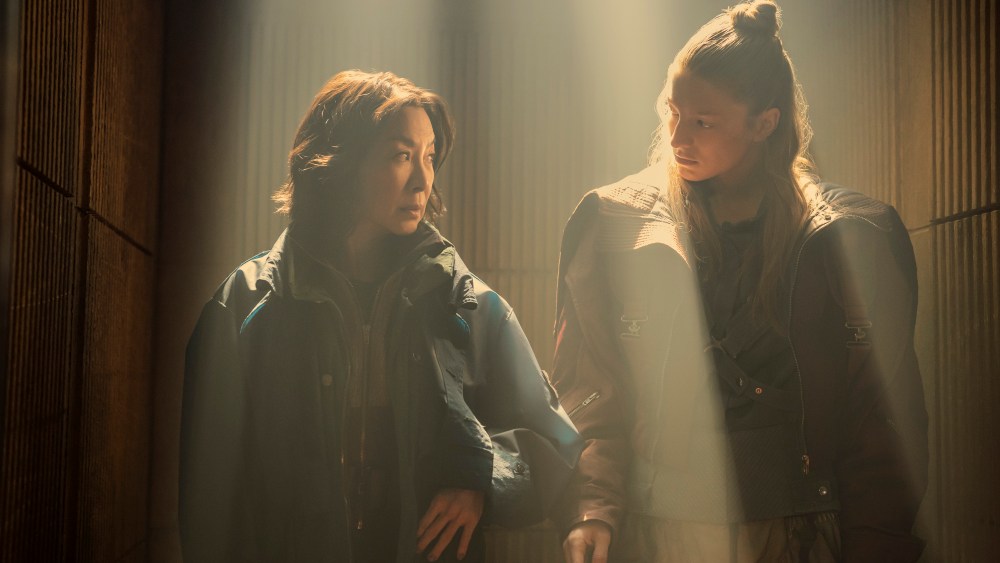
The enduring allure of the “Blade Runner” franchise extends beyond its futuristic cityscapes and thrilling narratives, deeply rooted in the philosophical questions posed by Philip K. Dick’s original novel. The first “Blade Runner” film showcased a world where humans hunted replicants, sparking a discourse on identity and morality. “Blade Runner 2049,” directed by Denis Villeneuve in 2017, advanced this theme by shifting focus to a replicant hunting other replicants, delving deeper into notions of the soul and authentic emotion.
Fast-forward to the franchise’s groundbreaking television debut with “Blade Runner 2099.” This eight-episode series, created by Silka Luisa of “Shining Girls” fame, builds on its predecessors by envisioning a future where replicants have staged a rebellion. The blade runners’ roles are inverted, now portraying replicants on the hunt for disobedient humans. This imaginative pivot refreshes the franchise’s core theme, turning it on its head while maintaining the philosophical undertones cherished by fans.
“Blade Runner 2099” has not only been shaped by its narrative but also by its visual aesthetics. The series harks back to Ridley Scott’s 1982 adaptation, renowned for its portrayal of an environmentally ravaged Los Angeles adorned with neon lights inspired by Tokyo. “Blade Runner 2049” continued this legacy, with cinematographer Roger Deakins updating the visual template, resulting in an Academy Award win.
Despite being greenlit by Amazon Prime Video in 2022, “Blade Runner 2099” took over four years to reach the screen. The delay arose partly due to the Hollywood strikes of 2023. However, creators Silka Luisa and Jonathan van Tulleken also took their time carefully expanding this richly detailed world—a world experienced through dual protagonists to leverage the extended format of the series.
Michelle Yeoh stars as Olwen, a replicant confronting the restrictions of her expiry date while grappling with newfound social power. Hunter Schafer joins as Marion, alias Cora, a human undercover as a blade runner, with a clandestine mission that harks back to humanity’s downfall. Schafer, having made waves in “Euphoria,” propels herself to the forefront with her dynamic portrayal, her character’s complexity reflected in intense emotional scenes and gripping action sequences. Paired with Yeoh, Schafer crafts a compelling narrative that melds seasoned expertise with fresh dynamism.
The series’ success is amplified by a talented supporting crew. Costume designer Helen Huang crafts a distinct style, clothing Yeoh in a multi-layered trench and Schafer in a leather jacket with imposing shoulders. Cinematographers, including Rob Hardy and Ula Pontikos, bathe scenes in dim, industrial light, creating atmospheric depth. Meanwhile, production designers Paul Inglis and Chloe Arbiture construct captivating environments, from a memory bank in Mexico to a replicant bunker brimming with tension.
“Blade Runner 2099” pays homage to the franchise’s legacy, retaining the vintage look of tech from the original films and echoing iconic characters. The series stays true to its detective noir roots while taking intriguing thematic detours. It evokes questions about the nature of humanity, resonating deeply in our AI-driven age. Ultimately, “Blade Runner 2099” feels like a blend of nostalgia and new, compelling storytelling—a reflection on the human condition dressed in futuristic attire.
For those keen on exploring the latest developments in this beloved franchise and beyond, stay tuned to BlueBoxNERD for the freshest updates from nerd culture.

Join the Nerd Squad 🛸
Trailers the day they drop. Breakdowns before the internet catches up. Reviews without the fluff. Straight to your inbox.
Subscribe FreeRead Originals